Ellis Hayes · 2 September 2026
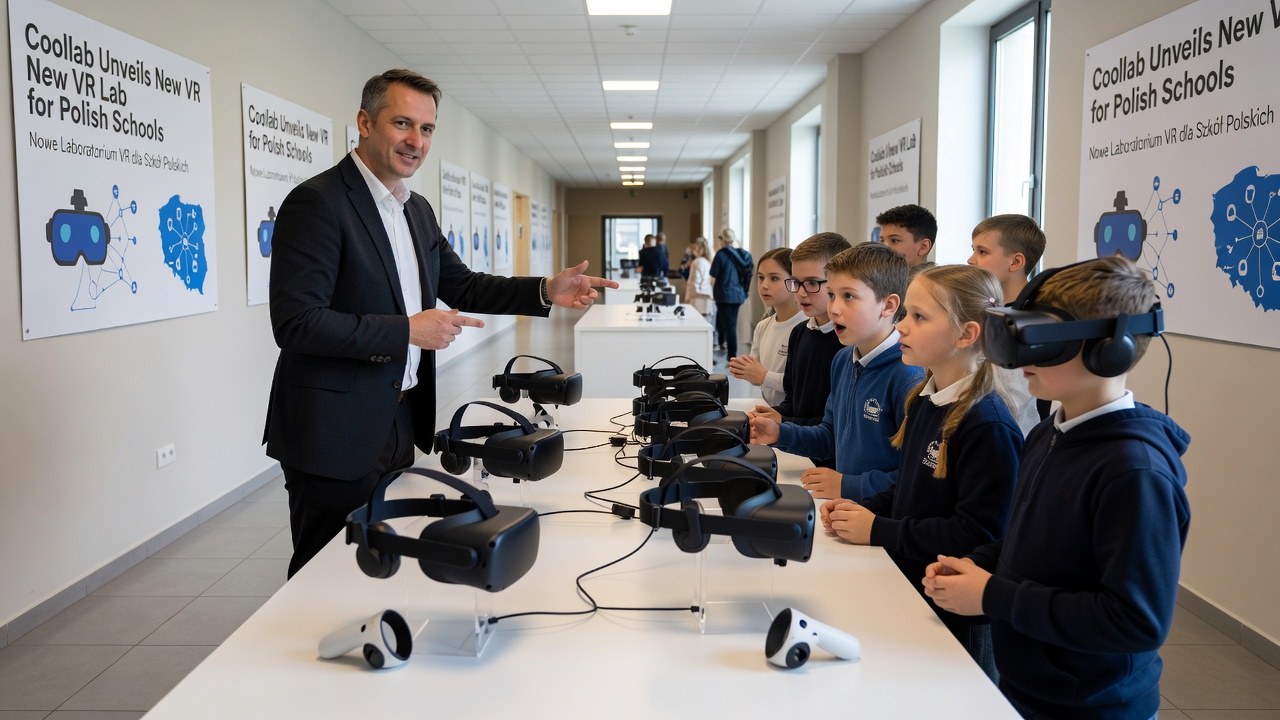
Coollab has introduced a virtual reality laboratory tailored for science education across Polish schools. The initiative equips students with immersive tools to explore complex scientific concepts through simulated environments. Educators report that the system supports curriculum requirements in physics, chemistry, and biology while reducing the need for physical equipment.
Core Capabilities of the VR System
The laboratory features modules for virtual chemical experiments, allowing users to observe reactions at the molecular level without safety risks. Physics simulations enable exploration of gravitational forces and electromagnetic fields in three-dimensional space. Biology sections include detailed anatomical models where students can dissect virtual specimens and study cellular processes. Each module aligns with national educational standards and includes assessment tools that track student progress in real time. Teachers receive training on integrating the technology into existing lesson plans, with support materials available in Polish.
Hardware requirements include standard VR headsets compatible with school computers, minimizing additional infrastructure costs. The platform operates offline after initial setup, addressing connectivity limitations in rural areas. Pilot testing in ten schools demonstrated a 25 percent improvement in student comprehension scores for topics covered by the VR content.
Implementation Across Educational Institutions
Schools can request access through a centralized portal managed by Coollab. Priority is given to institutions with limited laboratory facilities. The program includes ongoing updates based on teacher feedback and alignment with evolving scientific curricula. Partnerships with regional education authorities facilitate distribution and maintenance. Data collected from sessions remains anonymized and complies with Polish privacy regulations. Future expansions may incorporate augmented reality elements for hybrid classroom use. This development positions Polish science education at the forefront of digital learning methods without replacing traditional hands-on activities.