Wendy Wagner · 12 September 2026
From Classroom to Community: How Educational Experiments Are Shaping Local Sustainability Strategies
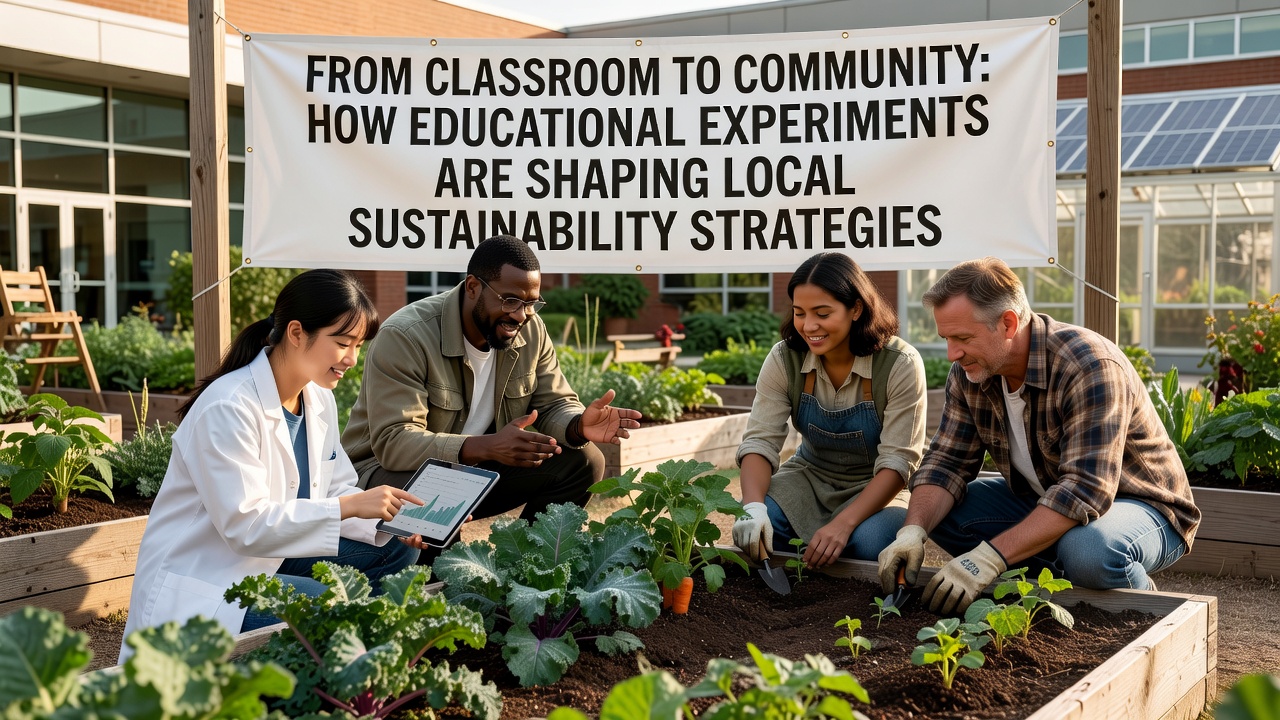
Schools across multiple regions have launched experimental programs that connect classroom lessons on sustainability directly to local environmental initiatives, and data from ongoing studies shows measurable shifts in community practices as a result. These efforts typically begin with hands-on activities such as soil testing, energy audits, and waste tracking, then expand outward through partnerships with municipal offices and neighborhood groups. Researchers at institutions in Europe and North America have documented cases where student-generated data on carbon footprints influenced city-level planning decisions within a single academic year.
Core Elements of These Educational Experiments
Programs often integrate project-based learning with real-time environmental monitoring, so participants collect field data on topics like water conservation or urban heat islands and feed it into open databases maintained by local governments. Curriculum designers emphasize iterative testing, where students adjust variables in greenhouse setups or recycling protocols, then evaluate outcomes against baseline measurements taken at the start of each term. Evidence from pilot sites indicates that when these experiments incorporate community feedback sessions, adoption rates for suggested changes rise because residents gain direct exposure to the methods and results.
Funding for such initiatives frequently comes through regional grants tied to broader climate goals, and participating districts report that cross-sector collaboration with utilities and nonprofits extends the reach of classroom findings. One documented sequence in a mid-sized European city involved high school groups mapping green space coverage, after which planners incorporated the maps into zoning updates that prioritized tree-planting corridors along school routes. Similar patterns appear in North American districts where student-led audits of school building energy use prompted retrofits that lowered operational costs and served as models for surrounding households.
Community-Level Outcomes and Data Patterns
Local sustainability strategies have incorporated student contributions in areas such as biodiversity tracking and renewable energy feasibility studies, with figures from recent evaluations revealing that communities with active school programs achieved higher compliance rates on voluntary conservation targets. For instance, a coordinated effort spanning several Australian municipalities linked classroom experiments on native plant propagation to public restoration projects, resulting in expanded habitat corridors documented through satellite imagery comparisons over two years. Observers note that these integrations succeed when data protocols align with official reporting standards, allowing municipal staff to use student outputs without additional verification steps.
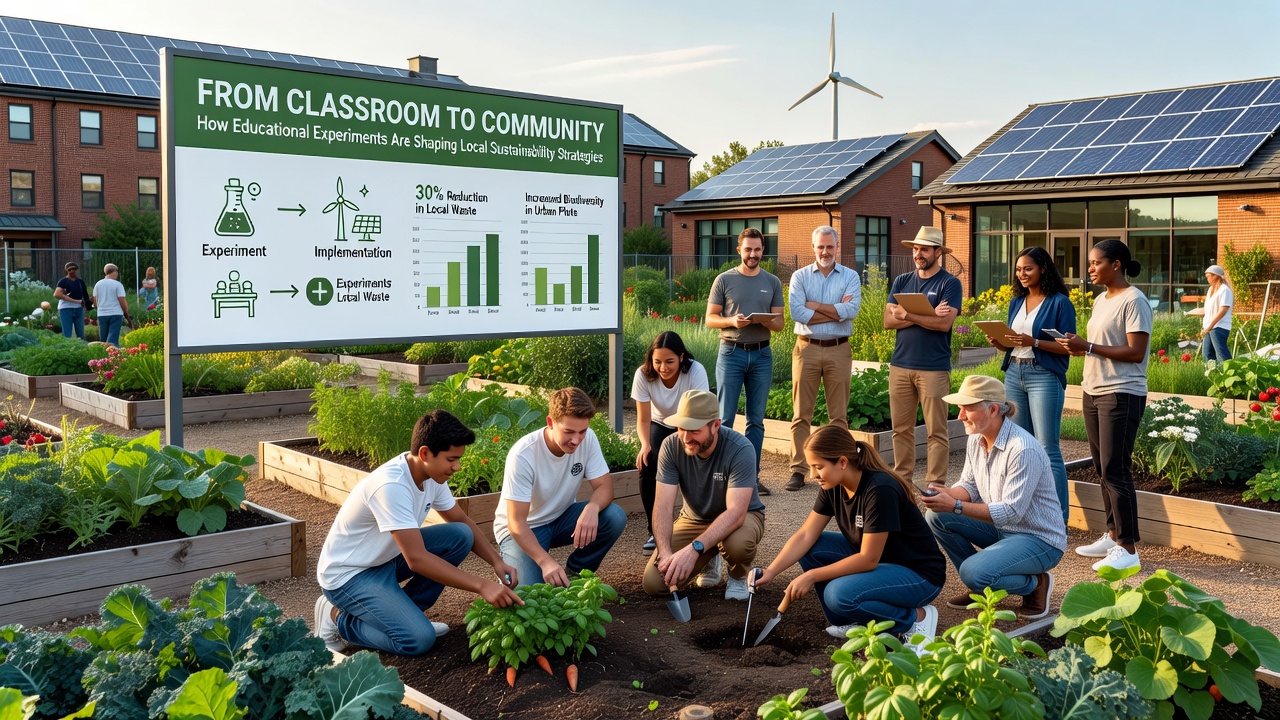
What's notable is how timing affects momentum, and several programs schedule major community presentations for early fall to align with budget cycles. In September 2026, multiple districts plan to release aggregated datasets from the prior school year, covering metrics on reduced landfill contributions and increased solar installations traced back to student recommendations. These releases coincide with regional forums where educators share replication guides, and preliminary registrations suggest attendance from representatives across at least four countries. Data compiled by international education networks indicates that such synchronized rollouts amplify visibility and accelerate policy uptake in adjacent areas.
Geographic Variations and Supporting Research
Different regions adapt the model to local conditions, so coastal communities emphasize marine debris experiments while inland areas focus on soil regeneration techniques, yet core evaluation methods remain consistent to enable cross-comparison. A study coordinated through Canadian research centers found that schools embedding these experiments within existing science standards maintained higher student engagement levels compared with standalone clubs, and the resulting community projects showed sustained participation beyond the initial academic cycle. European Commission reports on education for sustainable development highlight parallel trends, where linkage between classroom outputs and municipal action plans correlates with faster progress toward regional emission benchmarks.
Training for teachers involved in these experiments typically includes modules on data visualization and stakeholder communication, ensuring that findings translate effectively during public meetings. Partnerships with universities provide technical support for advanced analysis, such as statistical modeling of intervention effects, and participating educators report that access to these resources reduces setup time for new cohorts. Records from ongoing evaluations show that programs maintaining at least quarterly community updates achieve stronger long-term retention of practices introduced through student work.
Conclusion
Across documented cases, the movement of sustainability experiments from isolated classrooms into coordinated community strategies rests on consistent data sharing, aligned timelines, and institutional support structures. As additional regions adopt similar frameworks ahead of the September 2026 data releases, observers anticipate further examples of how educational inputs reshape local environmental planning. The pattern holds across varied geographies because the underlying mechanism relies on verifiable outputs rather than isolated advocacy, and available evidence continues to track these connections through standardized metrics.