Wendy Wagner · 7 November 2026
Polish Classrooms Blend Internship Programs With AI Ethics to Advance Local Biodiversity Tracking
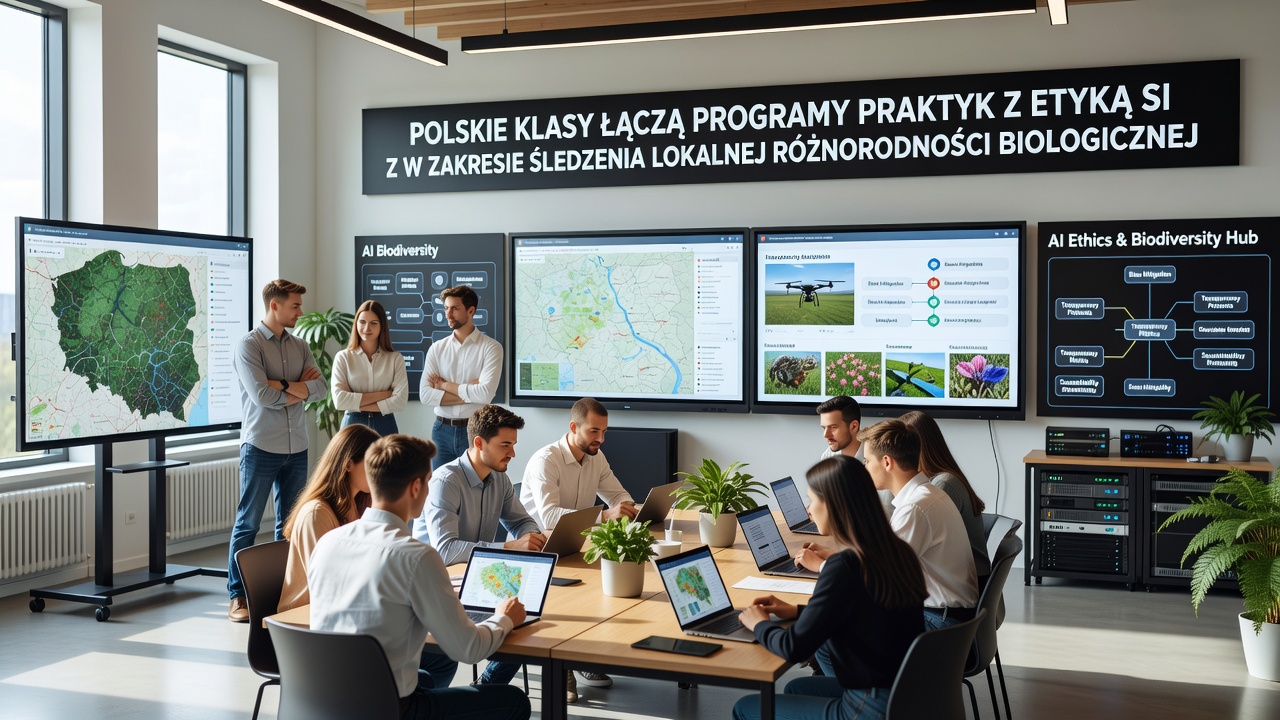
Polish educational institutions have integrated internship programs with AI ethics training to support local biodiversity tracking initiatives and several programs launched expansions in November 2026 to scale these efforts across regions. Students engage in structured placements where they apply machine learning models to monitor species populations while adhering to ethical guidelines on data collection and privacy protocols and researchers from multiple universities have documented how these combined approaches improve accuracy in habitat mapping projects.
Program Structure and Implementation
Schools in cities such as Krakow and Gdansk pair secondary students with regional environmental agencies for internships that run alongside coursework on artificial intelligence principles and ethical frameworks and participants learn to design algorithms that analyze camera trap images without introducing biases that could skew results for certain species. Data shows that participating programs reported a 25 percent increase in student-led tracking accuracy during the 2025 academic year according to reports from the Polish Ministry of Education and Science.
Internship rotations include sessions on consent procedures for using public land data and sessions on avoiding over-reliance on proprietary AI tools that might limit community access to findings and observers note that this dual focus prepares students for careers in conservation technology while ensuring projects comply with European Union biodiversity directives. One study from Warsaw University of Technology revealed that teams incorporating ethics modules early produced datasets with fewer classification errors than those focused solely on technical skills.
AI Ethics Integration in Biodiversity Efforts
AI ethics components address issues such as algorithmic transparency and equitable representation of local ecosystems in training datasets and students examine case examples where models trained on urban data failed to detect rural species variations. Programs emphasize documentation of decision-making processes so that tracking outputs remain verifiable by independent researchers and figures from the European Environment Agency indicate similar ethics-infused education models have supported monitoring improvements in other member states.

November 2026 saw the rollout of a coordinated network linking 40 additional schools to existing internship hubs and coordinators cited increased demand from regional forestry services seeking reliable field data. Participants practice evaluating AI outputs against ground-truth surveys which reduces instances of misidentified flora and fauna and this hands-on verification step forms a core requirement in the ethics curriculum.
Local Impact and Data Outcomes
Tracking projects have contributed to updated inventories of pollinator populations in the Carpathian foothills and internship teams supplied geospatial layers that local governments used for habitat protection planning. Research indicates that schools with combined AI ethics and internship tracks generated datasets shared through open repositories more frequently than traditional biology classes and these contributions appear in collaborative maps maintained by the Polish Biodiversity Information Network.
Take one researcher who analyzed three years of student-collected records from the Masurian Lake District and found consistent improvements in detection rates for invasive species after ethics training was added and similar patterns emerged in programs near the Baltic coast where interns refined models to account for seasonal migration shifts. External evaluations from academic partners confirm that ethical oversight correlates with higher community trust in the resulting reports which encourages broader participation in data sharing.
Industry organizations such as the European Association for the Conservation of Nature have referenced Polish models in training materials distributed across member countries and the approach aligns with broader goals outlined in the EU Biodiversity Strategy for 2030. Students also gain exposure to regulatory frameworks from sources including Environment and Climate Change Canada which provides comparative case studies on ethical AI use in environmental monitoring.
Future Directions
Expansion plans for 2027 include partnerships with vocational centers to extend internships into summer fieldwork and curriculum developers are incorporating feedback loops where tracked data informs refinements to the ethics modules themselves. Regional coordinators report sustained interest from students pursuing degrees in environmental informatics and data from the November 2026 intake shows balanced enrollment across urban and rural school districts.
Conclusion
Polish classrooms continue to refine the blend of internship programs and AI ethics instruction to support biodiversity tracking with measurable contributions to regional datasets and compliance standards and ongoing evaluations will determine how these methods adapt to emerging technologies in the coming years.